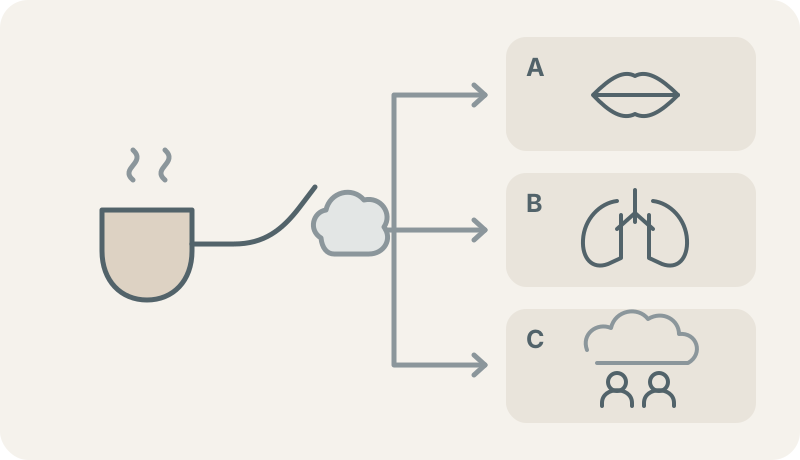
Conceptual routes: smoke contacting mouth tissues, possible lung inhalation and smoke in shared air. The drawing gives no dose, probability or inevitable disease sequence.
- A — Mouth
Smoke can contact mouth tissues even without deliberate deep inhalation.
- B — Lungs
An intention not to inhale is not a measurement of inhalation.
- C — Nearby people
Smoke in surrounding air is another exposure route.
First identify the pipe in the question
Here, a tobacco pipe means a bowl connected to a stem and mouthpiece. Tobacco burns in the bowl. A waterpipe, or hookah, is a different device in which smoke passes through water; findings about one do not automatically describe the other.
If a page says smoke passes through water, it is discussing a different system. A claim about water filtration cannot answer a question about an ordinary tobacco pipe.
The mouth, lungs and surrounding air are not one switch
The NCI describes nicotine absorption through both the lining of the mouth and the lungs. Not deliberately drawing smoke deep into the lungs does not remove mouth contact with smoke. It states that pipe smoking causes lung cancer and increases the risk of cancers including mouth and esophageal cancer. These are population-level conclusions, not a prediction that every user will develop cancer.
Treat possible lung inhalation and other people's exposure as separate questions. Smoke from burning tobacco and exhaled smoke can enter surrounding air. ‘Not inhaling’ describes an intention, not a measurement of what you or someone nearby actually breathed.
Why ‘one bowl equals how many cigarettes?’ misses the evidence
A chemical yield, nicotine absorption and a long-term disease outcome are different results. The NCI's pipe discussion concerns health outcomes; it is not a conversion table for a bowl of tobacco. A comparison also needs the product, pattern of use and outcome to be specified.
Fictional example: someone says, ‘I only hold the smoke in my mouth, so it is fine around my family.’ That sentence jumps from one claimed smoking habit to two conclusions: personal safety and safety for others. Neither follows from the habit alone. It is more useful to separate those questions than to look for a cigarette-equivalent number.
If the comparison is really about stopping
Say which product you use when asking for help, rather than describing all tobacco use as cigarettes. The NCI lists US cessation information and counseling routes in its fact sheet. Outside the US, ask an appropriate local health professional or cessation service about support available where you live.
A question you can take to that service is: ‘I use a tobacco pipe and would like help stopping; what support is available?’ Naming the product makes the request clearer than asking which kind of smoking is safe.
What to keep in mind
Sources
The central claims on this page were checked against the sources below.
- US National Cancer Institute: pipe — date not indicated
Sources checked: 2026-10-02
- US National Cancer Institute: Harms of Cigarette Smoking and Health Benefits of Quitting — reviewed 2017-12-19
Sources checked: 2026-10-02
General population-level tobacco information, not a personal exposure calculation or risk prediction. It does not assess symptoms, recommend product switching or prescribe treatment.