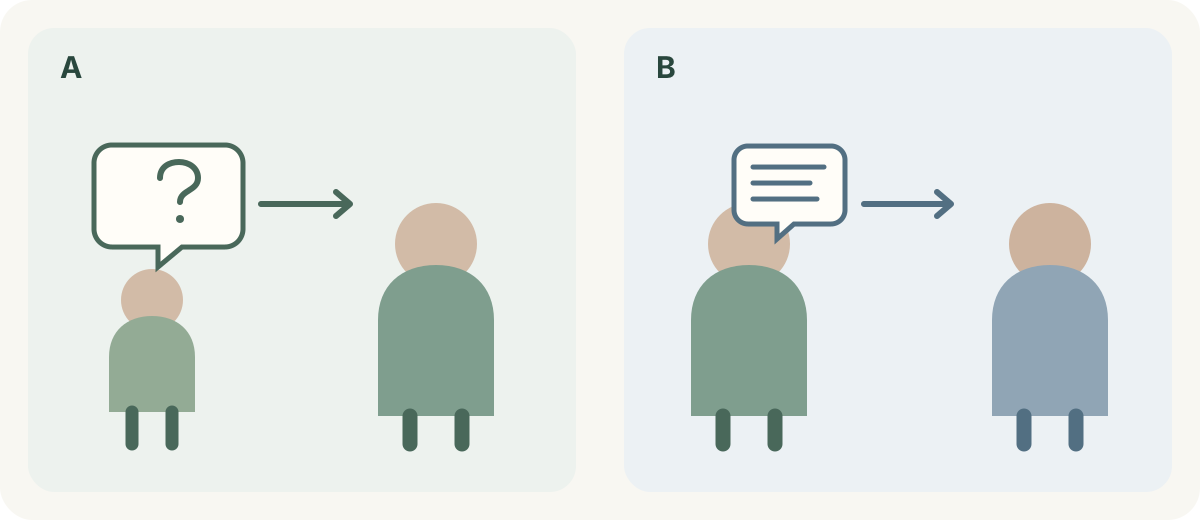
A role illustration, not a health prediction. Adults listen to the child and speak directly with other adults about the rule.
- A · The child can ask
Questions and concerns may be shared; watching or controlling adults is not the child's job.
- B · The adult acts
Explain the rule, speak to visitors or carers and seek adult help when needed.
Start with the question, not a lecture
Use clear, kind words the child understands, and listen before adding detail. ‘What are you wondering about?’ can reveal whether they are asking about a smell, a house rule or someone they love.
You might begin: ‘We are keeping smoke out of our home. I will talk to the adults who visit.’ Keep the explanation small enough for a reply. A younger child may want one sentence; a child asking further questions can get further answers. Check what the child has understood and add detail only when it is needed.
‘Why does Grandpa still smoke?’
Example reply: ‘Grandpa still smokes, and we care about him. In our home and car, the rule is that nobody smokes. I will tell him before he visits.’ This names the rule without calling the person bad or making the child responsible for changing him.
Adult action: speak directly to the visitor about the home and car before the visit. Do not send the child to deliver a difficult message. Keeping smoking out of the whole home and car is the relevant boundary; another room is not a smoke-free-home solution.
‘Will Mum or Dad get ill? Is it my fault?’
Example reply: ‘I cannot tell you what will happen to someone's health. An adult smoking is not your fault. Adults are responsible for their own actions. It is not your job to make an adult stop smoking. Adults will ask for help with their own health questions, and you can ask me what is worrying you.’
Adult action: listen to the actual worry instead of predicting illness or promising there will be none. Do not make a bargain such as ‘if you behave well, I will quit’. If the adult wants to discuss care, they contact a qualified professional; the child is not the adult's reminder system or reassurance provider.
‘Do I have to tell visitors to stop?’
Example reply: ‘No, I will speak to them. If something worries you, you can tell me or another trusted grown-up.’ There is a difference between allowing a child to ask for help and assigning them a task to watch adults.
Adult action: decide which adult will explain and carry out the rule, including during a car journey or a visit with a carer. Do not ask the child to check bags, hide cigarettes, count smoking or report on another parent. Resolve disagreements between adults directly.
If an adult breaks the rule, own the action
Example reply: ‘I smoked here even though we said not to. That was my action, not your fault. The home rule has not changed, and I will talk with the other adults about what happens next.’ Do not ask the child to approve an exception or to manage the adult's plan.
An apology can name what happened without a promise of perfect future behaviour. Adults should address the practical breach, not simply repeat the explanation. A child can have ordinary feelings or questions without being recruited into the adult's quit attempt.
Keep adult support separate from the child's role
If an adult wants help with quitting, choose an adult support route. Personal symptoms, medicines or health predictions are questions for qualified care, not for a family conversation script.
In England, the NHS finder lists local Stop Smoking Services; contact the service before visiting. Outside England, use the official route where you live. An adult can ask how to organize a smoke-free household without asking the child to attend, share a diary or take responsibility for the result.
What to keep in mind
Common questions
Should I tell a child that our family will never get ill?
No. You cannot predict that. Explain the rule and what adults will do without guaranteeing anyone's future health.
Can a child tell me that someone is smoking?
They can ask for help or tell a trusted adult what worries them. That does not mean giving them a duty to watch, count or check whether other people comply.
What if I am still smoking myself?
You can explain and follow the home and car rule without claiming that you have already quit. Say honestly what you are doing next, and keep your own care or quitting plan an adult responsibility.
Sources
The central claims on this page were checked against the sources below.
- UNICEF Parenting: How to communicate effectively with your young child — listening, clarity and realistic promises
Sources checked: 2026-10-01
- U.S. Centers for Disease Control and Prevention: Preventing Exposure to Secondhand Smoke in the Home (May 15, 2024) — whole home and car
Sources checked: 2026-10-01
- NHS Better Health: Find your local Stop Smoking Service — England only; contact before visiting
Sources checked: 2026-10-01
General communication ideas for adults, not smoking treatment for children, diagnosis or individual health prediction. Examples are invented; personal care needs qualified local help.