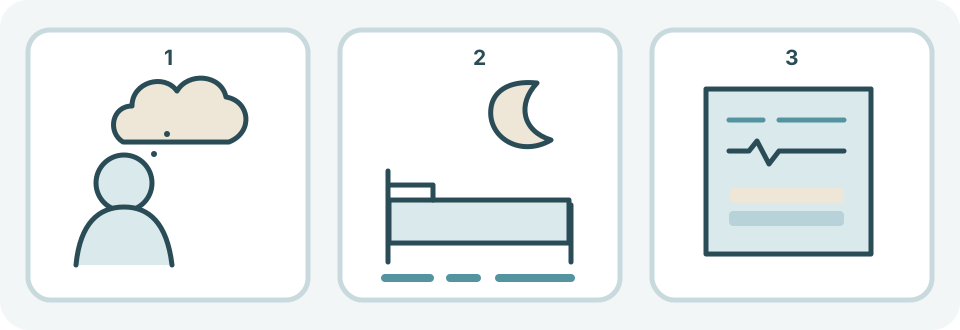
These windows can give different answers. The illustration is not a sleep test, diary or chart of recovery.
- 1 — Feeling
How restored someone says they feel.
- 2 — Continuity
How sleep and waking were recorded across the night.
- 3 — Stages
How a sleep recording classified parts of sleep.
A pleasant pause can still be stimulating
The NCNP explanation from Japan describes nicotine acting on reward-related brain circuits while also affecting the autonomic nervous system. A calming subjective experience can therefore coexist with physiological stimulation; the two statements do not cancel each other out.
Santé publique France identifies nicotine as a stimulant that can delay falling asleep, increase awakenings and make sleep lighter. This explains why using a cigarette as an evening relaxation ritual is not evidence that it is a sleep aid.
What did the study actually measure?
The 2021 review included 14 studies, with 10 entering the meta-analysis. Objective measures included sleep recordings and activity-based monitoring; subjective measures came from questionnaires. Recorded time awake after falling asleep, proportions of sleep stages and a questionnaire score answer different questions.
In the pooled results, long-term smokers showed differences in night-time continuity and stage proportions, including less slow-wave sleep. The questionnaire finding was less conclusive. Neither a non-significant questionnaire result nor an altered laboratory measure tells us how every smoker experiences every night.
A fictional example: two people say ‘I slept fine’
One person means they fell asleep without remembering a long wait. Another means they feel ready for work. A researcher asks instead how much time their recording shows they were awake after falling asleep. Those answers can all be honest and still describe different things.
This is an explanatory example, not a test for the reader. A phone's sleep label, time spent in bed or one remembered awakening cannot reproduce the review's laboratory comparisons or establish the cause of poor sleep.
Group differences do not isolate the cause of your night
The review's comparison was restricted to long-term smokers without comorbidities and healthy controls. Santé publique France also describes pain, stress and work schedules as factors that can affect sleep. That narrower research population is useful for studying a relationship but cannot settle an individual explanation.
Keep current smoking separate from changes after quitting. The review is not a personal recovery calendar, and it provides no universal last-cigarette cutoff. Waking and then smoking also does not, by itself, demonstrate that falling nicotine levels caused the awakening.
Ask a question that keeps the measurements separate
A useful question for a clinician is: ‘I feel calmer after smoking, but I’m concerned about my sleep. Could these be different effects, and what else should be considered?’ You do not need to calculate sleep stages or carry out an experiment with cigarettes to ask it.
For persistent or disruptive sleep problems, seek appropriate local clinical assessment. If you want cessation support in the United States, CDC lists quitline and public support routes; elsewhere, use the service for your location. Cessation coaching does not replace assessment of a sleep concern.
What to keep in mind
Common questions
Does the questionnaire result mean smoking has no sleep effect?
No. That pooled questionnaire comparison did not show a statistically clear difference, whereas some objective measures did. It is a limit on that measurement and evidence base, not proof that all sleep effects are absent.
Should I move my last cigarette to a fixed number of hours before bed?
This evidence does not establish one reliable cutoff for everyone, and this page does not prescribe one. Do not treat a timing rule as protection or use cigarettes to manage waking. A professional can address your sleep and support needs together.
Sources
The central claims on this page were checked against the sources below.
- Sleep Medicine Reviews / NCBI PubMed: Tobacco-induced sleep disturbances: A systematic review and meta-analysis — 2021
Sources checked: 2026-10-02
- 国立精神・神経医療研究センター(NCNP): 喫煙と睡眠 — 2022-09-27
Sources checked: 2026-10-02
- Santé publique France: Sommeil : les enjeux de santé — updated 2026-04-03
Sources checked: 2026-10-02
- US Centers for Disease Control and Prevention: How to Quit Smoking — reviewed 2024-09-27
Sources checked: 2026-10-02
Population sleep evidence, not a diagnosis or a smoking-timing plan. Persistent sleep concerns belong with qualified care; immediate medical danger uses local urgent or emergency services.