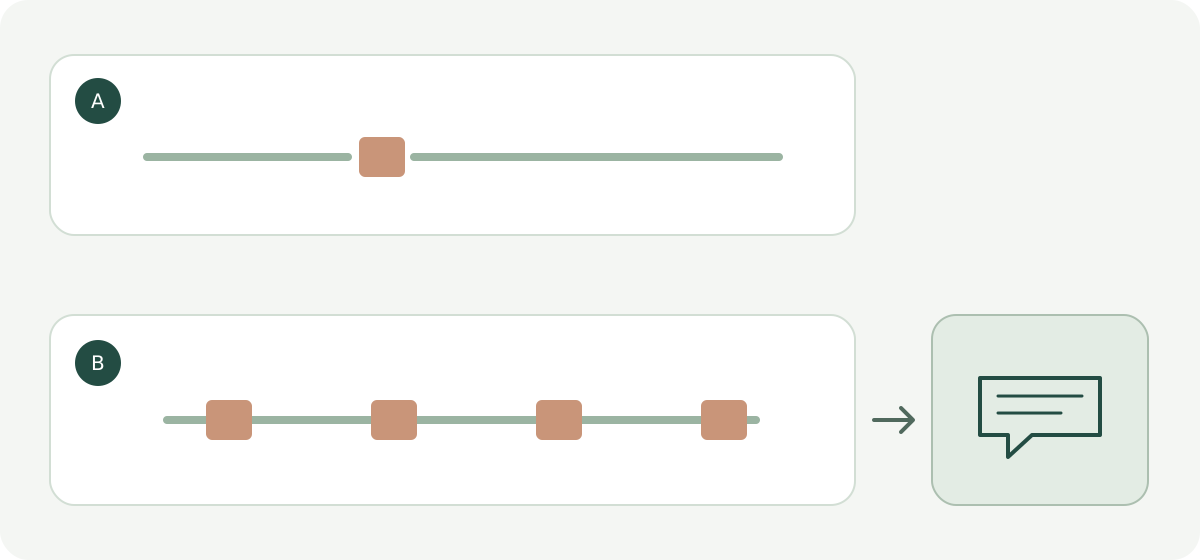
The squares do not stand for a number of cigarettes or days. Compare whether smoking has become built into the routine, then describe what needs planning now.
- A · A bounded event
The example returns to not smoking after one occasion; respond to that situation.
- B · A routine with continuing supply
The second example expects smoking in ordinary breaks and replenishes tobacco.
- Reorganize the attempt
Describe the current pattern and ask what preparation or support fits, without blaming yourself.
A pattern is more than the last cigarette
NHS distinguishes a single cigarette from returning to regular smoking. BIÖG also notes that the word ‘lapse’ is used in different ways and describes a return to old smoking patterns. These descriptions do not supply one universal number that everyone must cross.
For your own description, ask what is now expected: does a break routinely include smoking; do you replenish tobacco; do you carry it so it is there for the next ordinary occasion? These are prompts for explaining everyday behaviour, not a checklist that calculates dependence or the right treatment.
You can say ‘I have returned to regular smoking’ without adding ‘I am a failure’. If the pattern is unclear, describe what you know instead of forcing a category. Help does not depend on first finding the perfect label.
Two descriptions show the difference
Fictional contrast: ‘I accepted a cigarette at a gathering, then went back to not smoking’ describes a bounded event. ‘I now buy another pack when one runs out, take it to work and expect a cigarette at my usual breaks’ describes smoking that is becoming organized into the day. The difference here is the routine and ongoing supply, not a prescribed count.
The second person has not necessarily returned to the old amount. ‘It is less than before’ and ‘it is now part of my routine’ can both be true. Neither a lower amount nor the memory of a long smoke-free period answers what preparation and support fit the present situation.
Rebuild the arrangements, not your whole identity
NCI encourages people who have started smoking again to look at what they learned during their smoke-free time. Keep useful knowledge: a break place that worked, a supportive person or a specific occasion you managed differently. Recognition of the current pattern does not require deleting all that history.
Write a present-tense description on paper if useful: ‘Smoking is part of my work breaks again; I want a plan for breaks and a conversation about other support.’ Then identify what must be arranged now: the next attempt’s preparation, the supply you control and a service you can actually reach.
If you want to stop again now, you do not need to keep smoking until a ceremonial restart date. If you are not ready to choose a date, you can still arrange a conversation about the obstacles. This page does not impose NCI’s or NHS’s particular programme timetable on every reader.
Bring the current situation to a qualified service
In England, use the NHS local Stop Smoking Service directory and contact a service first to confirm availability. Elsewhere, check your own health authority or a qualified local professional. A useful opening is: ‘I had stopped, but smoking is now part of ordinary days again. Can we review a new attempt and the support available?’
Tell the professional about earlier attempts and any medicines used, questions or unwanted effects. Do not conclude from a resumed routine that a particular medicine is required, or change an existing dose on this page’s basis. A previous programme may also have rules about returning; ask rather than assume you are excluded.
What to keep in mind
Common questions
Is daily smoking the only kind of regular pattern?
No single daily or weekly rule is set here. A repeating routine can be relevant even if it is not daily. Describe when smoking is expected and how access is maintained; an official service can use its own assessment definitions.
Have I lost everything I gained from stopping?
Earlier observations and skills do not disappear. This page cannot calculate what a return means for an individual’s health, and a day counter cannot do that either. Keep an honest distinction between the earlier period and the current smoking pattern.
Do I have to be fully ready to quit before asking for help?
You can contact a qualified service to ask what it offers and discuss what makes another attempt difficult. Enrollment and treatment conditions depend on the service. You do not have to invent a firm date or a perfect explanation just to enquire.
Sources
The central claims on this page were checked against the sources below.
- US National Cancer Institute / Smokefree.gov: Get Back on Track After a Setback — review without self-blame
Sources checked: 2026-10-01
- NHS Better Health: Get back on track after a smoking relapse — review and qualified support
Sources checked: 2026-10-01
- Bundesinstitut für Öffentliche Gesundheit (BIÖG): Nicht ganz geschafft? — definitions and wider pattern review
Sources checked: 2026-10-01
- NHS Better Health: Find your local Stop Smoking Service — England
Sources checked: 2026-10-01
General education and descriptive prompts, not a diagnosis, an individual health estimate or treatment advice. Personal notes need not be entered on this website. Consult a qualified local professional about your own circumstances.