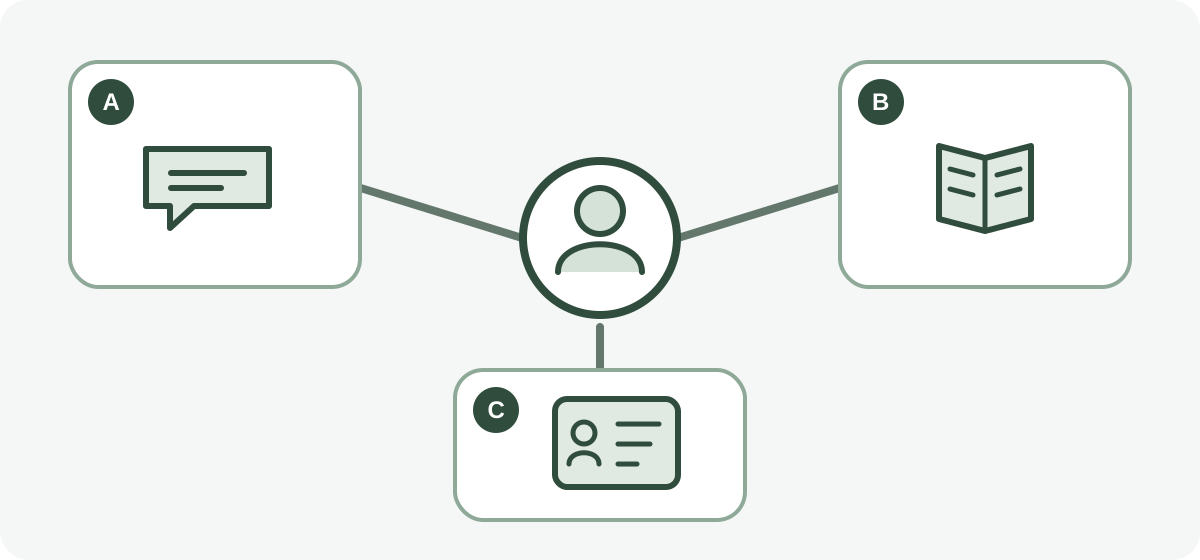
An editorial role map, not a formula for clinical competence. Check what is actually agreed in this interaction.
- A · Lived experience
A personal account is not your individual forecast.
- B · Support-role training
Ask what the training, supervision and task cover.
- C · Professional role
Verify relevant identity, scope and responsibility here; a title alone does not arrange care.
What can you verify in this interaction?
Static editorial examples, not credential checks or a clinical assessment. The same person may appear in several rows; a medium or label does not certify a role. Unknown details require asking the actual service.
| Interaction | Role to verify | Do not infer from the label | Responsibility to ask about |
|---|---|---|---|
| ‘This happened to me’ | Experience being shared | Their method predicts your result | Can we discuss options without treating the story as instructions? |
| A moderated support conversation | Training, supervision and assigned task | Moderator means qualified clinician | Who handles questions outside this role? |
| A personal health question | Relevant qualification and role in this service | Professional title alone creates care here | Who is responsible for assessment and follow-up? |
| One person with two backgrounds | Which role is active now | Lived experience cancels or proves qualifications | Are we sharing experience or using a formal service? |
Start with what you need, not the person's label
You may want company during a difficult evening, an explanation of a service or help with a personal symptom or medicine question. Those are different requests. Try: ‘Are you sharing your experience here, or speaking in a role assigned by this service?’ Then ask what that role covers.
Relevant questions include who trained or supervises a support worker, how a claimed professional identity can be checked through the appropriate service or local channel, and who takes responsibility if the question goes beyond the person's task. Training can be valuable without being the same as a clinical qualification; a qualification is also not proof that care has been arranged in this particular conversation.
A group is a format, not a qualification
WHO's July 2024 description of professional behavioural support includes individual, group and telephone formats. This is an international description of forms of support, not an accreditation of any local group or a prediction of an individual's outcome.
Likewise, meeting one-to-one or hearing a voice on the phone does not establish who is responsible. Ask the service to identify the role rather than deciding that a group must be ‘just peers’ or that a telephone adviser must be a doctor.
Experience can help a conversation without becoming a prescription
The NHS describes asking what support someone wants, listening and avoiding nagging, alongside routes to local stop-smoking support. Practical companionship and formal support can sit alongside one another; the page does not turn a friend's experience into an assessment of your health.
You might ask for someone to listen rather than suggest a method. You can also ask about another support route without ending that companionship. State which kind of response you want, and check the actual service when a question needs a defined professional responsibility.
Invented example: two backgrounds do not make every conversation a consultation
Imagine Alex has quit smoking and also works in a qualified professional role. At dinner Alex shares what helped personally. That does not automatically make the dinner conversation a clinical consultation. Equally, Alex's lived experience does not remove professional qualifications when Alex is acting in a properly identified service role.
This is an invented role comparison, not a success story or a claim about a real practitioner. In a formal service you would still check Alex's actual task, relevant qualification and responsibility for the question being asked.
Move the question without dismissing the person
You can say: ‘I would like to keep talking about the everyday difficulty. For this symptom or medicine question, who should I contact?’ Asking for an appropriate route is not rejecting companionship, and it does not require the peer supporter to diagnose or direct treatment.
Before an onward contact, clarify whether you have only been given information or whether a request was actually sent with your agreement; then check who takes the next step. Share sensitive details with the appropriate actual service, not a public thread or this website. If urgent help is needed, use the relevant local urgent route rather than waiting for a routine group reply.
What to keep in mind
Common questions
Can a peer supporter also be a clinician?
Yes, backgrounds can overlap. What matters is verified qualification where relevant and the role being taken in this interaction; neither the word peer nor a personal story settles it.
Must I leave a support group to get professional help?
These do not have to be alternatives. Ask who is responsible for your clinical question while retaining the everyday support you want; actual access and arrangements need checking.
Sources
The central claims on this page were checked against the sources below.
- NHS: Helping someone quit: support and local services
Sources checked: 2026-10-01
- World Health Organization: Professional behavioural support can be individual, group or telephone: July 2024
Sources checked: 2026-10-01
A way to clarify support roles, not a credential certification, diagnosis or personal treatment recommendation. No person or group is assessed by this website.