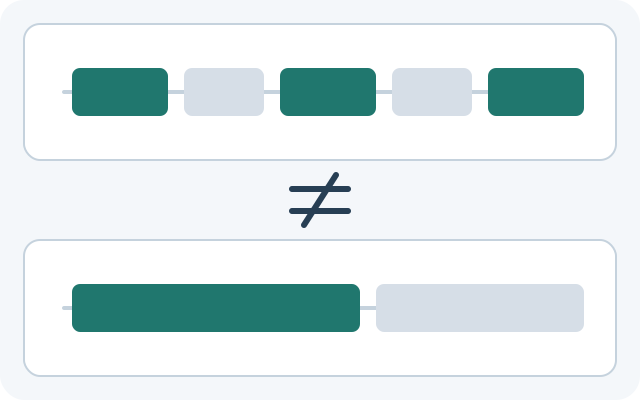
Invented schematic, not to calendar scale. Upper green pieces represent separate available gaps; grey interrupts them. The lower green block represents what a longer continuous activity would require—not newly available time produced by joining the gaps.
- Separate gaps
Time between them remains occupied; the total does not remove those interruptions.
- Continuous requirement
A longer uninterrupted activity needs an actual matching interval, not the sum alone.
A fictional weekly extract, not three pieces of one appointment
All gaps here are invented and assumed available. Total 30 minutes; longest continuous gap 10. No cessation time-saving data or required routine.
| Day | Actual gap in the example | Continuous minutes |
|---|---|---|
| Tuesday | 08:40–08:50 | 10 |
| Thursday | 20:10–20:20 | 10 |
| Sunday | 15:00–15:10 | 10 |
First remove the double counting
Smokefree lists driving, meals and work breaks among smoking-linked routines. Those occasions can continue without a cigarette. If smoking and a journey happened together, removing the smoking does not remove the journey. If rest is still needed, its interval is not spare labour or leisure capacity just because it is now smoke-free.
For a weekly plan, start from your current commitments and actual gaps, not a multiplication of cigarettes by minutes. Keep some gaps unassigned. NHLBI advises preserving sleep time; borrowing from sleep to make an optional project fit is not evidence that quitting created the time.
Three ten-minute gaps cannot host one continuous thirty-minute call
The table is a completely fictional extract from one week: ten free minutes on Tuesday, ten on Thursday and ten on Sunday. For this example, each is genuinely free and does not overlap another obligation. They total thirty minutes, but the longest single interval is ten. A planned uninterrupted thirty-minute conversation does not fit any of them.
The person could agree a shorter conversation in one gap, keep the gaps for quiet rest, or look for a different actual continuous interval. They cannot reserve Sunday 15:00–15:30 just because the three entries add to thirty: Sunday's listed gap ends at 15:10. A longer conversation also requires the other person to be available. None of these choices is a universal seven-day plan.
Check the edges before booking the activity
An activity described as ten minutes may need more room. A ten-minute visit with five minutes' travel each way needs twenty in this invented example. A call may need a usable place, whereas a short reading pause can end where you are. Include the actual setup, return and availability rather than treating a task's central part as its whole duration.
Choose one candidate, not a task for every former smoking occasion. If you have only an estimate of a gap, leave it tentative until the relevant arrangements are known. Time that belongs to an agreed work break or someone else's care arrangement is not automatically yours to book.
When this week changes, move the optional commitment
If an obligation expands, the optional item may move, shorten by agreement or disappear from this week's plan. Do not compensate by double-booking another person, skipping needed rest or extending every evening. At a later review, ask which interval was actually usable and why another was not. There is no requirement to have used every estimated minute.
This is scheduling, not help with dependence or a measure of quitting success. In England, NHS local stop-smoking services offer a separate support route; confirm access and use local services elsewhere. No timetable, location, contacts or smoking history needs to be entered here.
What to keep in mind
Sources
The central claims on this page were checked against the sources below.
- National Cancer Institute / Smokefree.gov: Smoking-associated routines include activities that still take time
Sources checked: 2026-10-06
- National Heart, Lung, and Blood Institute: Keep time for sleep when arranging a busy schedule; updated March 2022
Sources checked: 2026-10-06
- NHS: England: local stop-smoking support
Sources checked: 2026-10-06
Ordinary scheduling, not a work-entitlement decision, prescribed routine, productivity claim or prediction of quitting outcomes.