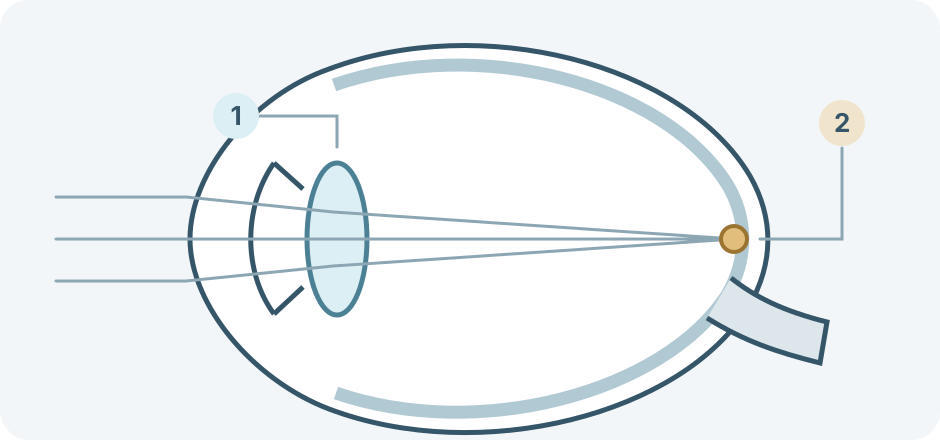
Schematic and not to scale. The highlighted macula is a location marker, not a lesion, and the drawing cannot assess vision.
- 1 — Lens
Light travels through this structure; cataract concerns clouding here.
- 2 — Macula
A central retinal region important for detailed vision; age-related macular degeneration is a different condition.
The lens: keeping the light path clear
Light passes through the lens toward the retina. A cataract is a lens opacity, so the problem concerns that light path. It is not the same as damage to the macula, and lens clouding cannot be identified or attributed to smoking from a small online diagram.
FDA and CDC identify smoking as a cataract risk factor. This statement describes a relationship with a named outcome, not a prediction that every smoker will develop it or a way to determine the cause in one eye.
The macula: detailed central vision
The macula is a specialised central part of the retina. Its role helps explain why age-related macular degeneration can affect tasks such as reading and recognising faces. This is different from the lens becoming cloudy.
The ‘age-related’ qualifier matters. The smoking evidence on this page should not be extended to every condition that has the word macular in its name, nor should an absence of noticed symptoms be treated as proof of eye health.
Evidence is not equally settled for every eye disease
The ocular review combines different forms of research rather than one identical experiment for all disorders. FDA specifically notes that evidence has not conclusively established smoking as a cause of glaucoma. Evidence for cataracts and age-related macular degeneration cannot be borrowed to settle that different question.
The review also describes environmental tobacco-smoke evidence as limited and contested in parts. Active-smoking findings and secondhand exposure are not interchangeable, and different published risk multiples cannot simply be merged into one personal probability.
Read a headline as a question, not a self-test
Imagine a fictional headline saying ‘smoking and vision loss’. Before interpreting it, ask whether the article studies lens opacity, macular disease or another outcome, and which population it compares. The headline alone cannot tell someone why a page now looks blurred.
A useful question for an eye-care professional is: ‘Which part of the eye are we assessing, and how does smoking fit among the relevant factors?’ New or concerning vision changes need appropriate care; sudden serious changes need prompt local urgent assessment. Do not delay that assessment for a quit date or use this illustration as a vision test. CDC lists US cessation support; elsewhere use local services.
What to keep in mind
Common questions
Does ‘vision loss’ mean the same thing as blindness in every study?
No. Sources may discuss different diseases, functions or severity. Read the actual outcome rather than treating every headline as the same event.
Can this drawing check my lens or macula?
No. It explains locations and functions only. It is not an image of disease, a home test or a guide to examinations or treatment.
Sources
The central claims on this page were checked against the sources below.
- Cutaneous and Ocular Toxicology / NCBI PubMed: Smoking and environmental tobacco smoke exposure: implications in ocular disorders — 2023; published online 2022-11-17
Sources checked: 2026-10-02
- US Food and Drug Administration: How Smoking Can Contribute to Vision Loss and Blindness — lens, macula and evidence differences; date not displayed
Sources checked: 2026-10-02
- US Centers for Disease Control and Prevention: Vision Loss, Blindness, and Smoking — 2025-02-24
Sources checked: 2026-10-02
- National Health Service, UK: Vision loss — reviewed 2025-08-28
Sources checked: 2026-10-02
- US Centers for Disease Control and Prevention: How to Quit Smoking — reviewed 2024-09-27
Sources checked: 2026-10-02
General eye anatomy and group evidence, not an eye diagnosis, individual risk, self-test, examination schedule, supplement or treatment plan. Personal vision concerns belong with qualified eye care.