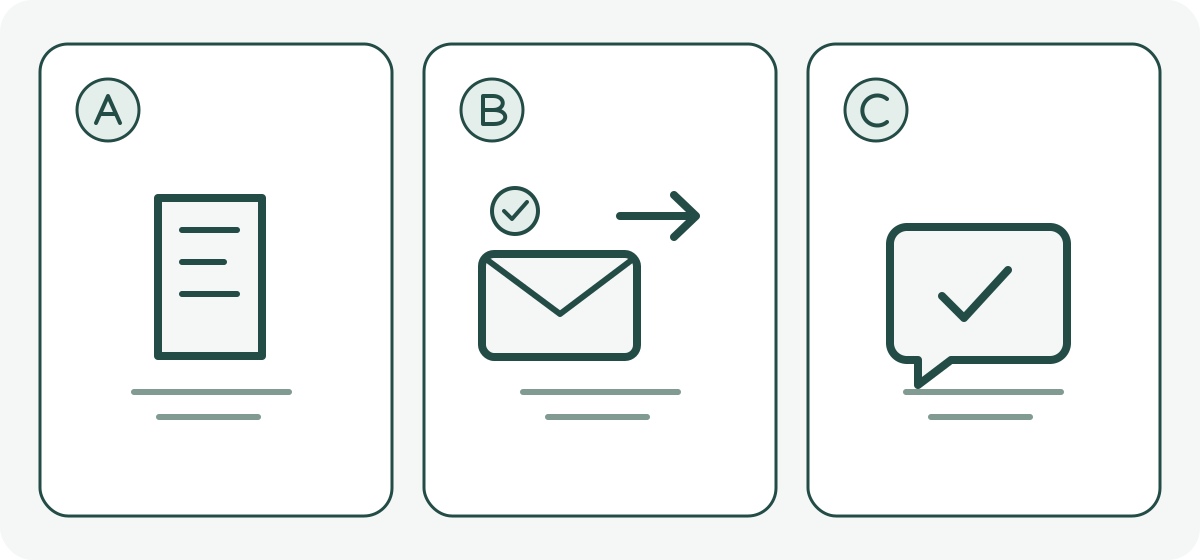
An editorial status check, not a compulsory sequence or a guarantee of access.
- A · Information in hand
You have a name or contact route; the next action may still be yours.
- B · Request sent
Confirm the recipient, what was shared and the agreed follow-up; acceptance is still separate.
- C · Next contact confirmed
The receiving service has specified the next contact; check who, when and how.
Why bring tobacco up during dental care?
The American Dental Association describes tobacco conversations as part of dental care, including asking about use, offering advice, discussing readiness and helping arrange support. It is a professional description of a possible role, not evidence that every practice offers a full cessation programme.
Ask the clinician to explain any oral-health finding in its own context. A question about smoking, a dental finding and an assessment of tobacco dependence are not interchangeable. You do not need to diagnose yourself from what you see in your mouth.
One small question is enough to open the conversation
If you are not ready to discuss quitting, you might say: ‘I understand this matters to my dental care. Could you explain that first? I don't want to make a quit plan today.’ If you do want help, try: ‘Can someone here talk with me briefly, or would I need another service?’
These are suggested ways to state your purpose, not a script every practice must follow. Clarify who would speak with you and what that person can do in this service. A dentist, hygienist or receptionist may have different tasks; the practice's name alone does not answer the question.
If another team is suggested, ask what has actually happened
A phone number means you have contact information. An onward request means someone has sent something. A message from the receiving service agreeing the next contact is a further step. None automatically proves the others, and not every route requires a formal referral.
Ask: ‘Do I contact them myself? Have you sent a request, and to whom? What information would go with it, through which route, and with what agreement from me?’ Then confirm the expected response and whom to ask if it does not arrive. These questions can stay on your own paper note.
Fictional example: a leaflet, not yet an appointment
During a routine cleaning, Sam says they would like support but cannot easily attend during the day. In this invented conversation, the team gives a local service's contact details. Sam asks whether the team has made contact. The answer is no: Sam needs to call and ask what is available.
Sam leaves with one clear task rather than waiting for a call that no one has arranged. The example illustrates a handover question; it is not a real practice's service offer, a claim that evening appointments exist or an account of quitting success.
Keep the dental work and the onward help separate
Ask which dental questions remain with this team, whether any dental follow-up is arranged, and which quitting questions belong to the other service. Confirm language support, access requirements and fees with the provider that will actually deliver the support, rather than importing another practice's arrangements.
For personal symptoms or medicine questions, use the appropriate qualified professional. Do not wait for a routine referral if urgent local care is needed. There is no reason to submit your dental findings, smoking history or referral note to this website.
What to keep in mind
Common questions
Do I need to be ready to quit before mentioning it?
You can ask what help exists or why the subject was raised without presenting a finished plan. Tell the team what you are ready to discuss; its actual service requirements still need checking.
Does every dental team prescribe cessation medicines?
Do not assume so. Professional authority, training and the service offered vary by place and role. Ask the relevant qualified practitioner what falls within this appointment; this page does not choose a medicine.
Sources
The central claims on this page were checked against the sources below.
- American Dental Association: Dental conversations about tobacco: counselling and the 5As
Sources checked: 2026-10-01
Conversation and handover preparation, not diagnosis, prescribing or a promise of a local service. The relevant team confirms its own responsibilities and arrangements.