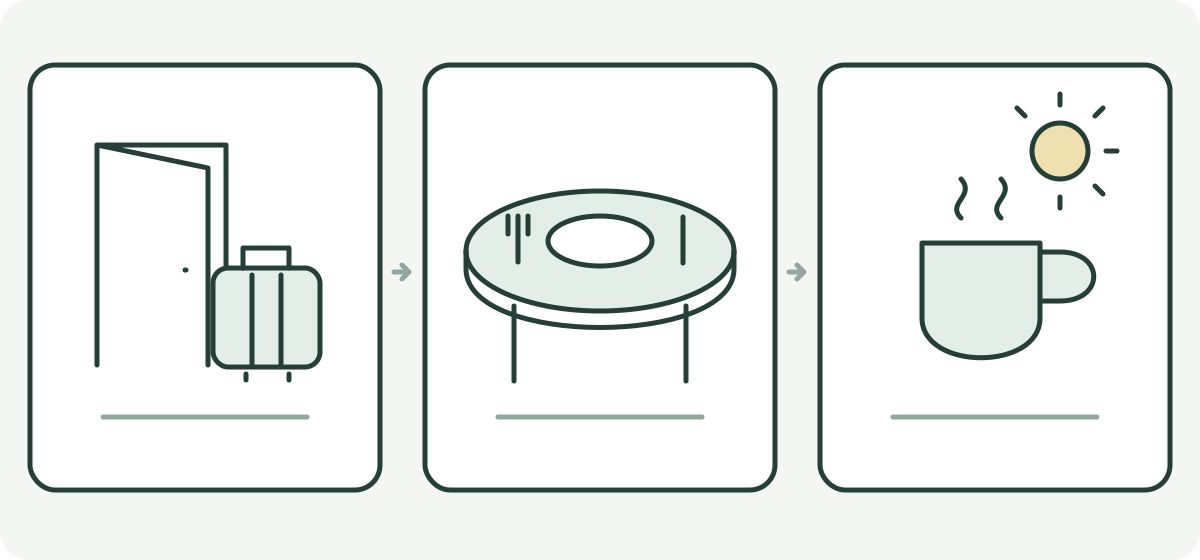
Editorial illustration: read left to right as time at home. You can use only the moment relevant to you; there is no required completion or health result.
- Arrive
Find what you will need before the familiar moment arrives.
- First evening
Make one alternative available where it will be used.
- Next morning
Check what was practical and what remains unconfirmed.
Familiar places may need a fresh look
NCI lists routines such as coffee, meals and breaks as possible smoking triggers, and suggests changing smoking-linked routines. A familiar place can be worth checking again; it does not prove that returning there will make you smoke.
Look at what is still useful: the place you used for a non-smoking break, a meal routine, or a person who already agreed not to offer cigarettes. A trip may have changed timing without cancelling the arrangement. Ask whether it still fits instead of starting from zero.
An evening with a suitcase still by the door
Fictional example: you get home late and know that you used to go to the balcony after dinner. You decide to eat, clear the plate and sort tomorrow's clothes at the table instead. Before dinner, put the clothes where you can reach them. ‘I'll keep busy’ now has an actual activity and location.
If a housemate usually joins you, ask: ‘Could we talk at the table tonight, without cigarettes?’ Their agreement is not automatic. If they prefer the balcony, you can still sort the clothes on your own. This illustrates availability, not proof that sorting clothes reduces cravings.
Tomorrow's first ordinary moment
Choose the next encounter separately. If morning coffee matters to you, keep the coffee if you want it but use another smoke-free seat or prepare the day's bag afterwards. Choose something you can do when tired; a complicated new schedule may not be usable on this morning.
Afterwards, ask a practical question: was the place available, was the item ready, did the other person agree? An urge or a difficult evening does not answer all three. Change the unavailable part, not every arrangement at once.
Unpack possessions, not your treatment plan
Check your own smoking-related belongings without throwing away someone else's property or changing a shared space without agreement. Keep medicines and clinical instructions outside this sorting task. Returning home is not a reason to stop, restart or change a dose.
Check existing appointment reminders and the local time if you travelled across time zones. Do not silently move an agreed call because your calendar shifted. Ask the service when an arrangement is unclear; wanting a different slot is not confirmation of it.
Bring a concrete question if you need support
Ireland's HSE discusses using a diary to see smoking patterns and routes to support such as an adviser or pharmacist. That is general preparation guidance, not a validated first-night protocol. Readers elsewhere should use their own local health-service route.
You can say: ‘I am home again and the after-dinner moment is difficult. Could we discuss an alternative that fits my evenings?’ You need not collect a week's perfect notes before asking. Individual symptoms, medicines or a return to smoking belong in a separate discussion with qualified support.
What to keep in mind
Common questions
Do I need to rebuild the whole plan tonight?
No. Choose the next real moment and prepare what it needs. Leave working arrangements in place; revisit another part when it becomes relevant.
What if I smoked during the trip?
That is separate from simply arriving home. You can still make the evening practical, but discuss the smoking and any care questions with qualified support rather than assuming a new date or medicine change.
Sources
The central claims on this page were checked against the sources below.
- US National Cancer Institute: Know Your Triggers — meals and familiar routines
Sources checked: 2026-10-01
- Health Service Executive, Ireland: Get ready to quit — diary and support in Ireland
Sources checked: 2026-10-01
General routine-planning ideas and an invented example, not treatment or a prediction of staying smoke-free. Do not alter medicines or other people's belongings. Keep personal notes private; this page needs no travel or health details.