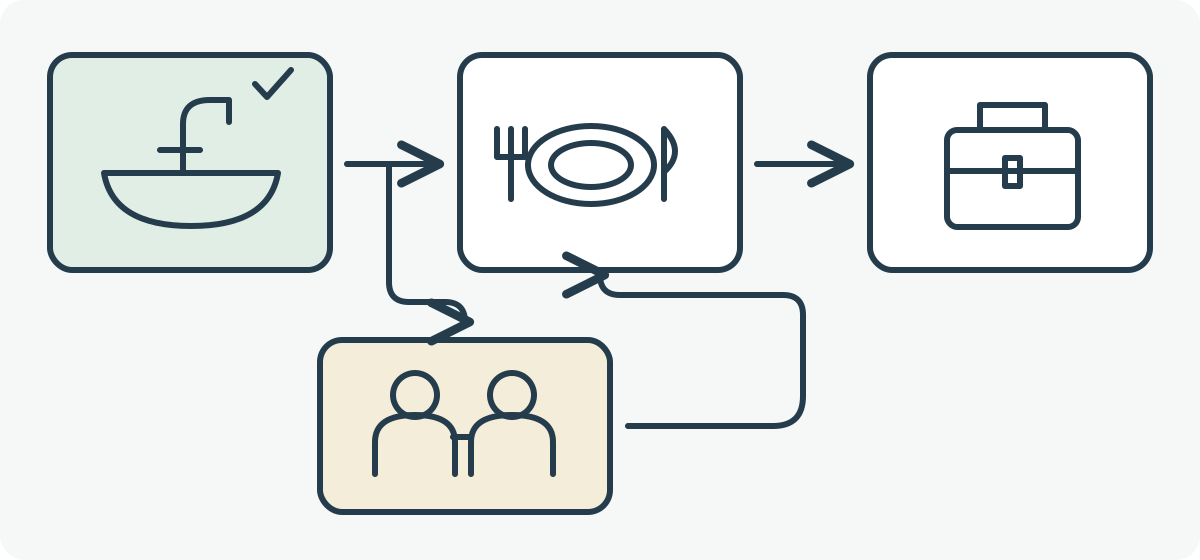
The care branch returns to breakfast because breakfast is still unfinished in this example. Choose your actual next essential, not a fixed clock slot.
- Already completed
Washing is done; no need to repeat it just because the sequence changed.
- Necessary interruption
Attend to care, then check what remains.
- Rejoin what is unfinished
Here it is breakfast, followed by the bag and the next responsibility.
Why plan the sequence at all?
NCI lists waking among familiar smoking situations and suggests changing routines. The task sequence here is an ordinary-life example, not a withdrawal timeline.
Tonight: remove the search from tomorrow
Put clothes, keys and necessary work or travel items where you can find them without blocking a walkway. Arrange the usual breakfast essentials. Deal with your own smoking items beforehand; shared belongings require agreement, and medicines remain under their existing instructions.
Choose a first ordinary task, for example going to wash, and its next connection: ‘After washing, breakfast’. Keep household care and existing necessary routines in the sequence. There is no need to set an earlier alarm just to add a new ritual, or to buy a special breakfast.
One morning, with two realistic interruptions
Fictional example: tonight you set out clothes and the work bag. The intended morning is washing → breakfast → getting dressed → taking the bag and leaving. The example has no claim that these tasks remove an urge.
You finish washing, then a person you care for needs help. After attending to that need, check what remains: breakfast is the next unfinished task, so join there rather than washing again or abandoning the rest. If care continues, reassess what is practically possible and any arrangements that need notice.
On another morning you wake later than planned. Keep necessary food, hygiene and care; drop an optional reading activity first. Check whether departure or work arrangements need updating. Do not hurry into an unsafe journey or treat lost minutes as a reason to skip essential needs.
Find the rejoin point, not a score
Ask: ‘What is already done? What still needs doing before the next responsibility?’ A task that genuinely remains becomes the rejoin point. A task made unnecessary by changed plans can be left out; you do not need to recreate the original order for its own sake.
If you want a private reminder, use broad task names, not exact waking times or a report to someone else. Later, check a practical snag such as keys being hard to find. The question is what to place differently tonight, not whether one imperfect morning predicts your whole quit attempt.
If mornings repeatedly outgrow the plan
A qualified service can help with preparation beyond rearranging belongings. In England, NHS information lists 0300 123 1044 and an adviser finder, with separate routes for other UK nations. Use a local health service outside the UK. Sleep, medicine or treatment concerns belong with an appropriate qualified professional; this sequence does not change their advice.
What to keep in mind
Common questions
Must washing always come before breakfast?
No. The example order is not a universal rule. Keep the ordinary order that fits your responsibilities and identify the next task that is actually unfinished.
What if I work from home?
The destination can be starting your ordinary work or daytime task rather than leaving the house. Check what is needed before that responsibility; do not add a commute you do not have.
Should I record every missed step?
No. A brief note about one practical snag is optional. You do not need minute-by-minute tracking or an account of care duties to use the rejoin idea.
Sources
The central claims on this page were checked against the sources below.
- US National Cancer Institute: Know Your Smoking Triggers — waking and routine changes
Sources checked: 2026-10-01
- NHS: NHS stop-smoking support — separate routes by UK nation
Sources checked: 2026-10-01
General preparation, not a symptom assessment, treatment instruction or prediction of quitting success. No morning schedule is submitted here.