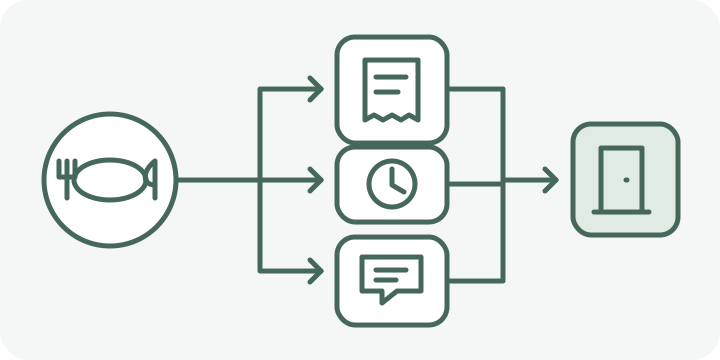
An editorial diagram, not a prescribed sequence. Payment, waiting and conversation can each need a different arrangement; they do not all require a smoking break.
- Payment
Finish or explicitly hand over your responsibility.
- Waiting
Choose a place that actually remains available.
- Conversation
Agree where and when you will meet again.
Book the ending as well as the table
The NHS includes after-meal routines and social situations among possible smoking cues; NCI guidance includes choosing places where smoking is not allowed. Neither source evaluates the restaurant arrangements invented here. Check the actual venue, including the waiting area and any outdoor seating, rather than assuming the word ‘outside’ means no smoke.
Ask the people you are meeting a practical question: ‘What are we doing after we eat?’ If the usual answer is a smoking break at the entrance, suggest where you will stay and when to reconnect. You need not turn the booking into a declaration about your smoking history.
If you are still responsible for the bill
Invented situation: Dani is sorting the shared bill when friends get up to smoke. Dani says, ‘I'm finishing payment here. I'll meet you at the agreed place afterwards.’ The task has a clear end, and staying at the table is a decision rather than being left without a next step.
Do not disappear while others depend on you to settle up, or assume a friend will take over. If you want to leave before payment is complete, agree the handover explicitly. This is ordinary coordination, not advice about how much anyone should spend or lend.
Waiting and continuing the conversation are different
Invented situation: one person is still eating, so Sam waits at the table rather than moving with the smoking group. If the restaurant needs the table back, Sam checks another permitted waiting place and tells the remaining companion. A plan that depends on keeping a table indefinitely is not available merely because it sounds comfortable.
If you want more conversation, propose another place where smoking is not allowed, or agree to meet after the others' break. If they prefer to smoke first, your arrangement can continue without their immediate agreement: finish your responsibilities, wait where arranged or leave by your own agreed plan. You need not make everyone stop socialising or change their decision.
When the ending changes, name the missing condition
A delayed bill, unavailable waiting area or last-minute change of plans is a reason to choose again. Ask what you still owe the group in practical terms and what you actually want to do next. Avoid replacing an unavailable option with ‘just be stronger’. A refusal can be brief: ‘No thanks, I'm staying here until the bill is done.’
For the next meal, change the specific condition that was awkward: payment handover, meeting point or waiting permission. This page does not predict how intense or long an urge will be. Personal questions about symptoms, medication or support needs belong with a qualified local professional or cessation service.
What to keep in mind
Common questions
What if I want to stay with friends, but they want to smoke?
You can arrange to continue the conversation after their break or elsewhere where smoking is not allowed. Say where you will be, finish any remaining responsibility, and keep an option that does not depend on their changing their minds.
Sources
The central claims on this page were checked against the sources below.
- NHS: Understand your smoking triggers and cravings
Sources checked: 2026-10-02
- National Cancer Institute / Smokefree.gov: Steps to manage quit day
Sources checked: 2026-10-02
Ordinary restaurant coordination with invented examples, not treatment, venue certification or a promise about quitting. No booking, payment or personal smoking information is collected.